

A session
You arrive as you are. There is nothing to prepare or tidy up before coming.
You set the direction. My task is to accompany with attention: following what appears as you speak, coming into contact with it, and offering questions that invite you to look closely. The questions may open a new perspective on what is happening to you, or simply invite you to notice what is going on in your body in that moment. The conversation moves at the pace of what is opening.
Toward the end we slow down to land together: what moved, what you are taking with you, what wants to keep unfolding in the days ahead.
Where the work can take us
The map I use comes from Aletheia, the school where I trained, and it distinguishes different depths of the same territory.
Sometimes we work with parts: those inner voices (the one that criticizes, the one that controls, the one that pushes) that are, underneath, trying to protect you. We do not fight them; we make room for them, and explore what they are guarding.
Sometimes we work with processes: emotions and experiences that were left halfway and are looking to complete themselves. The body usually knows the way.
And sometimes the work is quieter: resting in the presence that holds all of the above. We naturally inhabit different states of presence (more rooted, more spacious, more fluid) though we rarely recognize them. Learning to detect them, and to rest in them, changes the quality of everything else.
Two rhythms
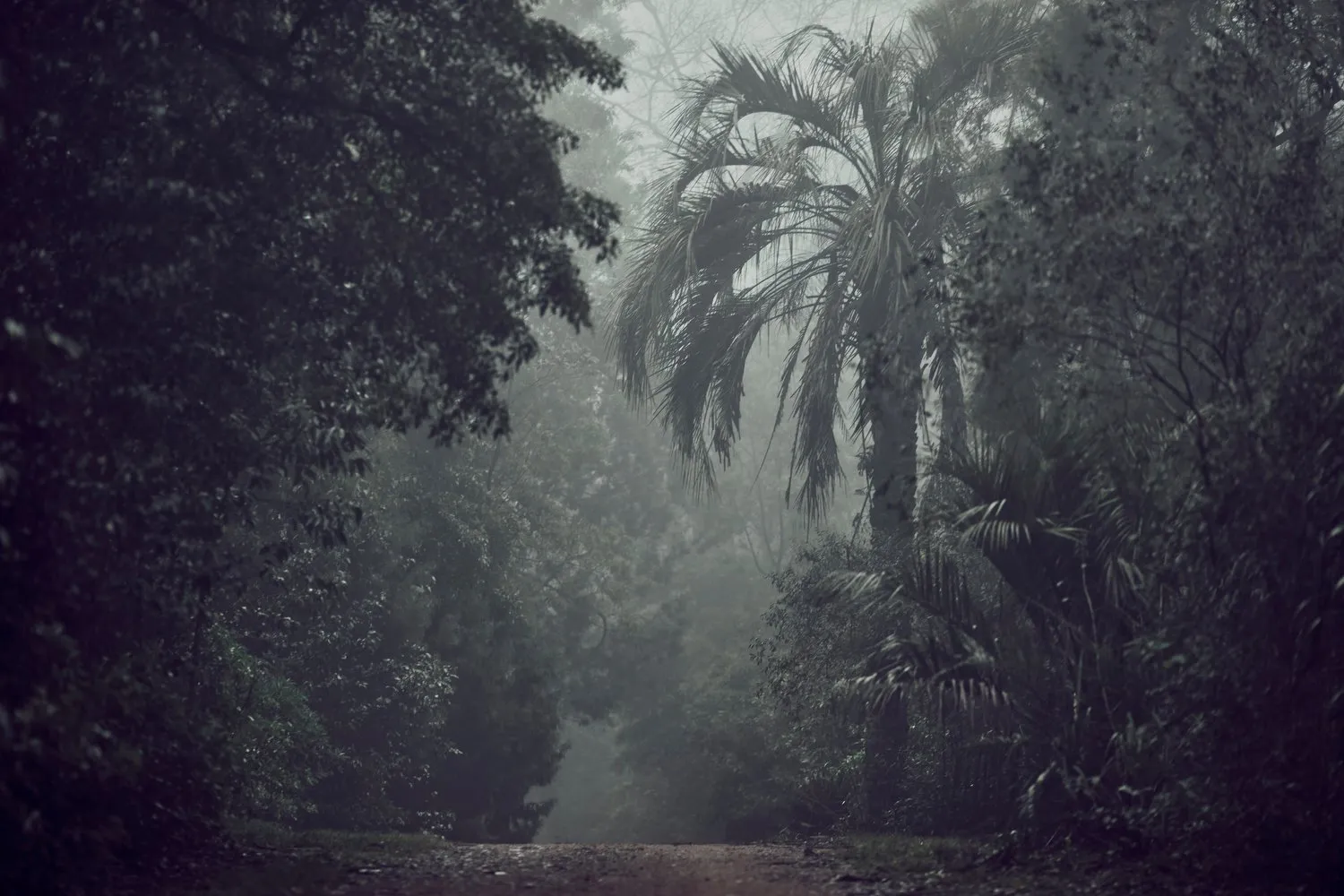
For two years I walked almost daily through the same forest, camera in hand. There were entire days without a single photograph. And there were days when a hundred arrived, without my looking for them.
Inner work has those same two rhythms.
The patterns that protect you are like the forest fog: they do not lift because you push them. They have spent years doing their job, and rushing them is usually exactly what keeps them in place. That is the first rhythm, the slow one, the rhythm of trust.
The other one arrives on its own. One day, without warning, the fog opens: what used to take weeks to appear begins to arrive by itself, like those mornings when the forest gives away a hundred images.
Knowing both rhythms saves impatience. Both are part of the same unfolding.
Between sessions
I do not assign homework. Sometimes you will leave with a micro-practice: a small, simple gesture for the hours after the session, which is when whatever moved most needs room to settle. It is not a duty; it is a way of continuing to pay attention to yourself. Here, less is more.
My roots
My practice rests on two coaching trainings and twenty years of working with attention.
From Aletheia I learned the paradigm of unfoldment: to stop treating people as problems to solve and learn, instead, to accompany the way life is already unfolding in them.
For four years I have been taking courses with Art of Accomplishment. From Joe Hudson and Tara Howley I learned to receive whatever shows up with vulnerability, impartiality, empathy and wonder, and to accompany the integration of the three brains: head, heart and gut. What the head understands only becomes real when the heart and the gut come along.
The Alexander Technique runs through everything I do: it is my daily training in noticing unnecessary effort and making space, in cultivating my ability to choose my response to each stimulus.
Each of these tools I discovered in myself before offering it. I will not ask you to go anywhere I have not been.
Concrete details
- One-hour individual sessions, over Zoom.
- In English or Spanish.
- We meet every one or two weeks, depending on what the process asks for.
- I live between Montevideo (September to April) and Augsburg (May to August), so session times adjust twice a year to your time zone.
- If you are in either city, we can also meet in person.
Beginning
If something here resonates, write to me. We start with a conversation, no strings attached, to meet and sense whether I am the right person to accompany you.